Clay
Leave the World BehindClay’s crisis is not simply that he cannot find his way: it is that the role he expects himself to play—as provider of information, reassurance, and protection—proves unreliable. Before the blackout, he moves through work and family life with a mixture of diligence, self-interest, and ease. Once the usual means of orientation disappear, his attempts to take charge expose both his care for his family and his dependence on systems he had taken for granted.
Identity and Ordinary Life
Clay is Amanda’s husband and the father of Archie and Rose. He has tenure and is supposed to review a book for The New York Times Book Review, a commission requiring only nine hundred words. He knows he is diligent but also somewhat lazy: he wants to be asked to write for the publication while resisting the work itself. That small contradiction establishes a familiar pattern in him, a wish for recognition that does not always translate into action.
His working life is distinct from Amanda’s. When he asks whether things are all right at her office, the question carries a teasing inflection, but he understands that her profession is largely separate from his. He considers that separation one possible explanation for their happiness. Their acquaintances include many divorced couples, while Clay and Amanda retain separate lives within their marriage. The book presents this not as a grand declaration but as part of their ordinary arrangement, alongside the practical business of a family vacation.
Clay’s ease is also shaped by class awareness. He has tenure, and Amanda holds the title of director, but they do not have level floors or central air-conditioning at home. He sees inherited advantage as the key to success and recognizes that the family can only imitate ownership of a luxurious house for a week. His vacation comfort therefore rests on a distinction he understands: temporary access to the house is not the same as possessing the resources that made it possible.
Family Life and the Limits of Comfort
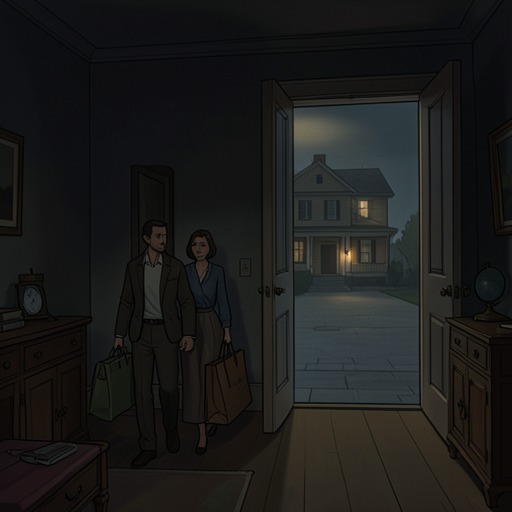
At the vacation house, Clay briefly experiences the quiet as shelter. With the house between him and the swimming children, and the surrounding hedge seeming to keep the world away, he imagines Amanda by the pool and relaxes outside. He has brought his laptop, intending to complete his review after the children are in bed. His leisure is incomplete even before the emergency: work remains waiting, and his planned evening combines writing with a drink and cigarettes.
That protected feeling depends on the house and its setting. Clay can imagine his family nearby without hearing them, and he treats the separation as comfort rather than danger. When he goes inside, however, the children are visible through a window: Rose is absorbed in her own game, while Archie exercises on the diving board. The scene places the family within view but not within his immediate attention, a calm domestic arrangement that will soon be displaced by uncertainty about where they are and whether they are safe.
The Decision to Seek Information
When G. H. explains that managing money requires information in order to assess risks and make choices, Clay responds by deciding to drive into town. He wants to be the person who puts everyone at ease, and he takes pride in setting out to discover what is happening. Yet his confidence is already unstable. He admits privately that the wish to protect the others is partly vanity, and that he wants protection himself. The blackout turns a familiar masculine pose into a test he cannot master by intention alone.
His investigation quickly becomes disorientation. Clay tries to measure the trip by reconstructing its minutes: he remembers checking the car display, revises how long he has been driving, and accounts for a cigarette that took less time than he usually claims. He pulls into the McKinnon Farms driveway to smoke rather than continue toward the farmhouse, because continuing would mean acknowledging how panicked he has become. When he resumes driving, the turns do not look familiar; a sign marked Corn gives him no useful direction. The careful accounting of time and landmarks cannot supply the certainty he wants.
The Noise and His Return
While alone in the car, Clay encounters the mysterious noise. He stops and waits eight minutes, expecting it to recur; when it does, it is distant, over Queens. The event intensifies rather than resolves his isolation. He has no information to bring back, and the thought that he had been ready to bundle the family into the car and leave the house gives way to the immediate need to find his route back. The sign promising eggs finally identifies a turn he recognizes. Relief comes through an ordinary roadside landmark, not through any understanding of the larger emergency.
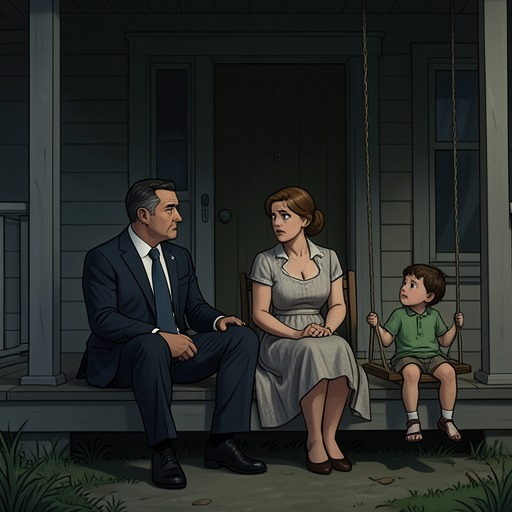
Inside, Amanda, G. H., and Ruth are waiting. Clay experiences their attention as if they were positioned for a scene whose lines he has not learned. Amanda’s response is a brief expression of relief rather than a rush to embrace him. He says he has returned because he heard the noise and was worried, but does not tell them about the woman he saw, wondering instead whether she is out in the rain. His return restores his presence to the group without giving them the explanation he had set out to obtain.
Helplessness and the Family Emergency
Later, when the family prepares to go for help, Amanda asks for a map because the GPS is no use. Clay interrupts the practical planning to confess that he got lost on his earlier drive. He describes passing the egg stand, taking the wrong route, turning around, and not knowing how he found his way back. The confession changes the account of his earlier absence: what he had presented as an attempt to investigate had also been an experience of losing control and concealing his failure.
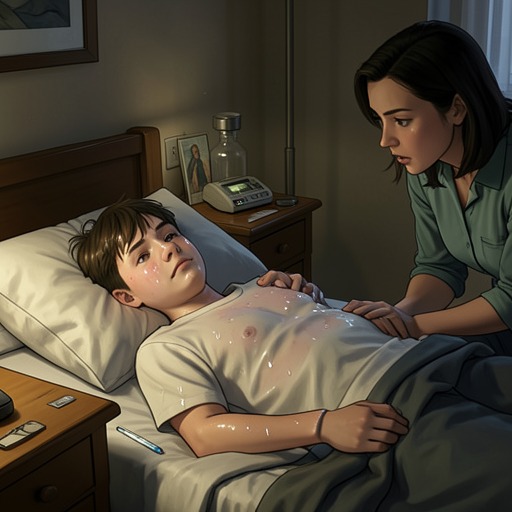
The family’s circumstances make that admission more painful. Archie is sick, Rose is missing, and Clay cannot see what he is supposed to do in the immediate moment. He says he cannot do anything without his phone and calls himself useless. His heart, as the narration frames it, is with Rose, even as he struggles to help the others act. He has put Archie’s teeth in a plastic bag and keeps the bag in his pocket, turning a concrete sign of the child’s illness into something he repeatedly handles while facing the prospect of seeking medical help.
Clay’s arc in these episodes is a movement from assumed competence to acknowledged dependence. He does act: he agrees that G. H. and Ruth may stay, drives out in search of information, returns when the noise unsettles him, and takes part in planning to get help. But action does not make him master of events. The lost route, the useless phone, the map he cannot make legible, and the missing child expose the limits of his authority. His admission of fear and confusion is not a solution; it is the point at which the family can see the cost of the confidence he had tried to perform.